
You see the injustice, poverty, and disaster zones around the world—and you must do something about them. If you believe, as we do, in Fordham’s Jesuit-inspired mission to care for others and fight for justice, the international humanitarian affairs major might be the perfect program for you.
In our interdisciplinary program, offered by the Institute for International Humanitarian Affairs at Fordham University, you’ll examine the global impact of disasters, disease, poverty, conflict, human rights violations, and policies. You’ll learn the tools and techniques experts use to improve lives—and cast a critical eye on complex variables like politics.
You’ll study with faculty from international affairs, political science, philosophy, history, and anthropology, and learn from experts from the UN, NGOs, and the private sector.
From technical innovations used to help populations in crisis to theoretical critiques of humanitarian activities, our program will expose you to challenging situations—and innovative solutions.
You’ll learn more than international humanitarian studies here. You’ll also study philosophy, theology, literature, languages, ethics, science, and the performing arts through Fordham’s common core curriculum, the centerpiece of our liberal arts education.
We want you to excel in your field—and as a human being.
Click here for application deadlines.
Hear from our HUST students, Kayla and Hampus! Video production and editing by Community Engagement Exchange Fellow, Lίvia Piskorάn.
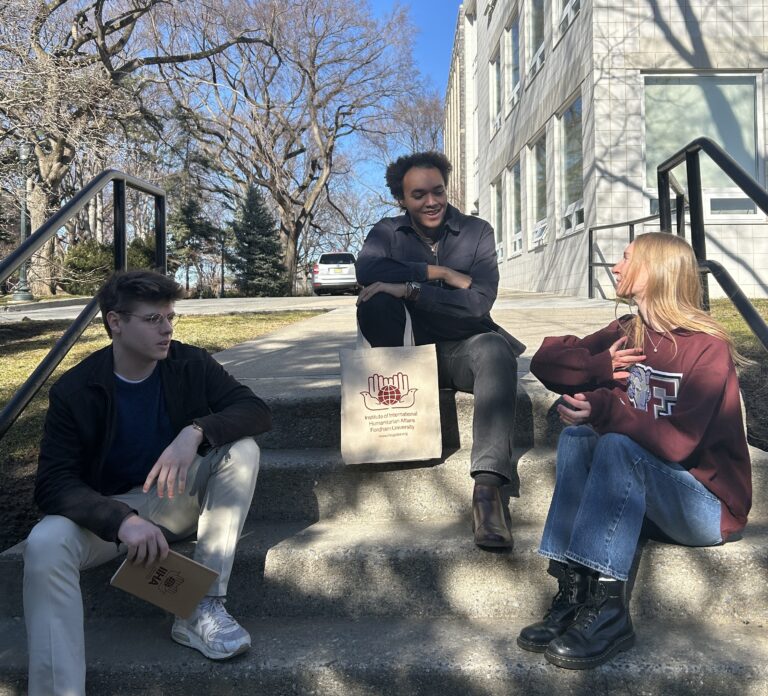
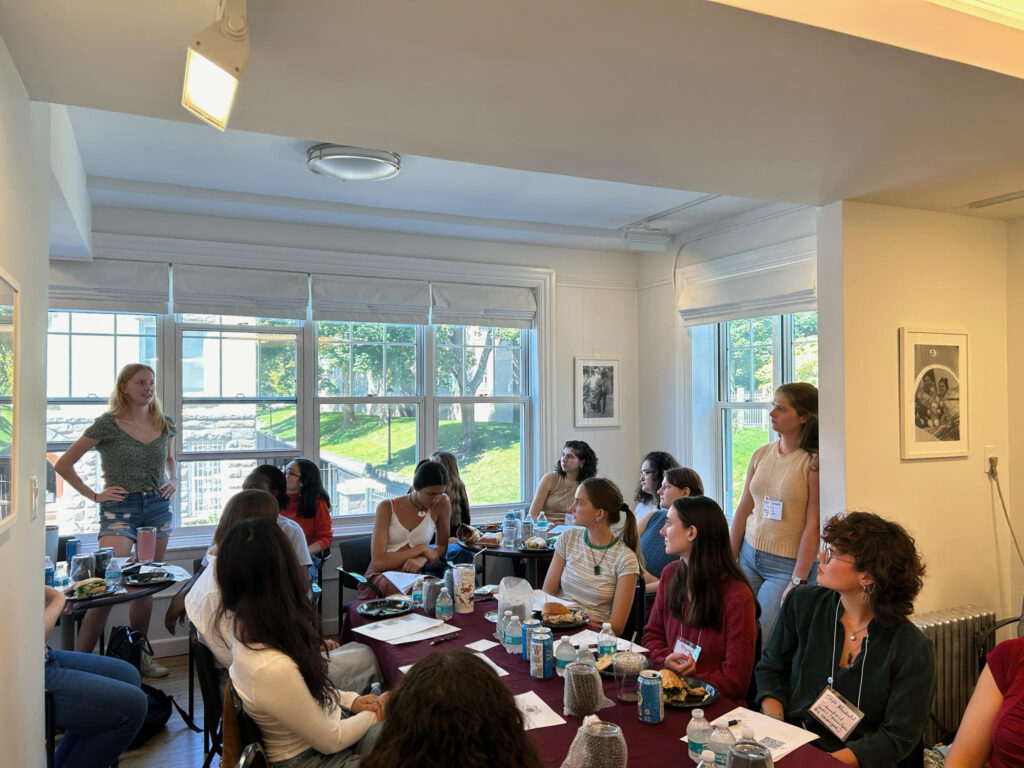
Our mission extends beyond simply satisfying the course requirements for the major or minor, and the IIHA and their advisor will support them in a number of ways. Students are encouraged to:
“After taking humanitarian systems, my only regret is that I didn’t have more time to take other courses you taught. Even though I am a finance major, your class was incredibly interesting and had me thinking about topics and subjects outside my comfort zone. Aside from in class material which was incredibly interesting and insightful, your life lessons about hard work and integrity are ones I will take with me into my professional career.
As I approach my final days at Fordham before officially graduating, I wanted to once again thank you for an incredible classroom experience and hope that students in future semesters take away from your classes as much as I have.”
Finance Major, HUST Minor, 2023.
He currently works as a Business Valuations Analyst at UHY Advisors, Inc.
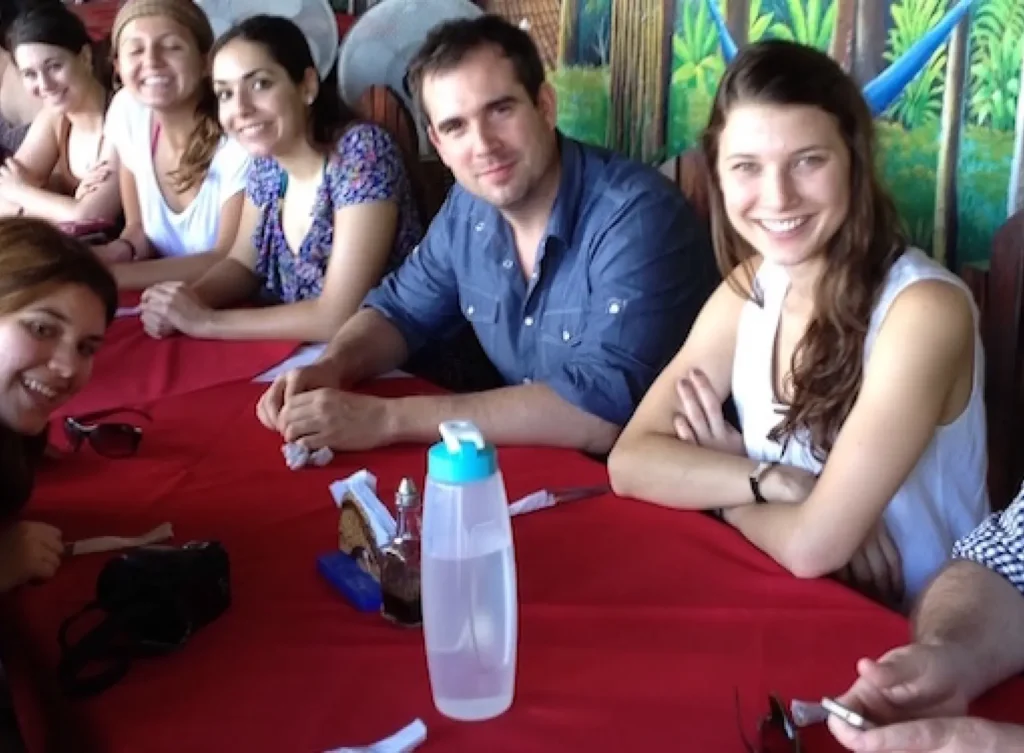
The combination of rigorous interdisciplinary coursework and experiential learning opportunities prepare students for a host of graduate studies and careers, such as disaster relief, global public health, human rights, and international law at the following locations:
The Humanitarian Studies program fostered my passion for humanitarianism and enriched my understanding of this field by connecting me to mentorship opportunities with experienced professors and network events where I met aid workers and gained insights into their meaningful work.”

Fordham University Alumna, Humanitarian Studies and International Political Economy Former intern at Medicins Sans Frontieres (MSF) and now current Association Analyst at Medicins Sans Frontieres (USA)
When you join the Humanitarian Studies Undergraduate Program at Fordham University you have access to many resources:
Conferences
Webinars
Internships
Study abroad opportunities
Monthly Conversations with Humanitarians event
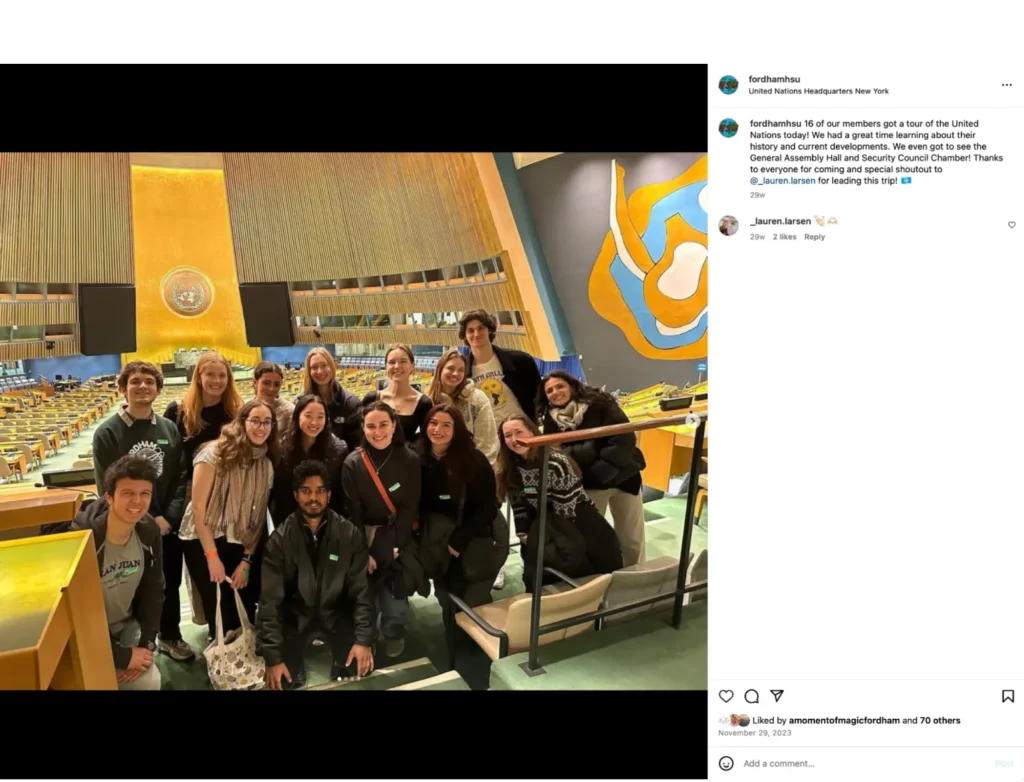
The Humanitarian Student Union (HSU)
Click here to view application requirements
NOHA Program for graduate international students
Fordham University Career Services
Fordham University Academic Advising Services
Click here to request more information
Visit the Fordham University website here to learn more about life at Rose Hill in the Bronx and Lincoln Center in Manhattan
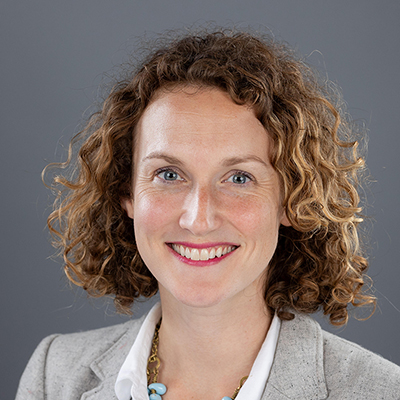
Assistant Provost for Corporate Relations at Fordham University
Holly Curtis is an accomplished education leader, currently serving as the Assistant Provost for Corporate Relations at Fordham University. In this role, she fosters partnerships between academia and industry, driving innovative collaborations and advancing strategic goals. Prior to this, Holly was the Chief of Staff at Ascend Public Charter Schools, where she oversaw strategic planning for one of New York’s largest charter networks, and she also led MBA Admissions at NYU Stern School of Business.
With a strong background in strategic leadership, education management, program development, and recruitment, Holly’s career began in international development with Pencils of Promise in Laos. Her work there shaped her expertise in strategic planning and talent development.
Holly holds an MBA from NYU Stern and a BA in International Political Economy from Fordham University. She is deeply committed to advancing diversity and inclusion, and is a certified administrator of the Intercultural Development Inventory (IDI). She is also an alumna of NYU’s Global Inclusive Leadership Management Institute.
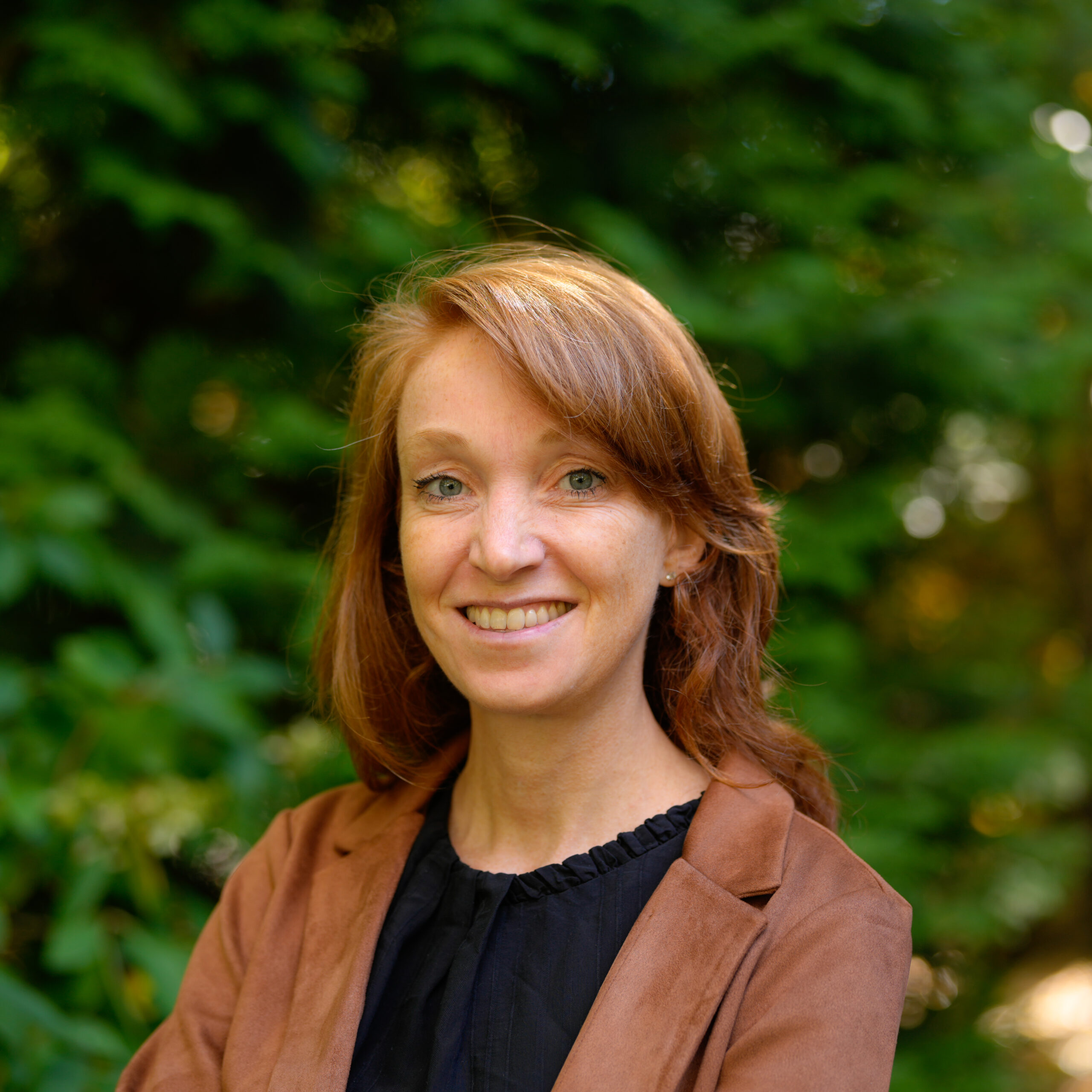
Helen Hamlyn Humanitarian Fellow and Global Program Director
Martine van der Does is a Dutch national and humanitarian expert with over 15 years of international experience. With a background in architecture she started her career working on humanitarian shelter at Delft University of Technology but soon moved to the field with Médécins sans Frontières (MSF) as a Construction Logistician. In 2010 Martine joined the Netherlands Foreign service where she worked in the Africa Department, Stabilisation and Humanitarian Aid Department and served as a Diplomat in Afghanistan and Jordan. In 2018 joined the International Committee of the Red Cross (ICRC) in Myanmar where she worked in remote areas on protection and water and habitat issues. Until recently Martine was the Regional Humanitarian Coordinator for the Netherlands Government in Amman, Jordan.
Martine is academically involved as a lecturer at Delft University in the Netherlands and Fordham University in New York. In the past years she also ran the prestigious International Diploma in Humanitarian Assistance (IDHA) as a Course Director in Geneva. Martine holds a Master of Science Degree in Architecture from Delft University of Technology and a Masters of Arts Degree in International Humanitarian Action from Fordham University. In her time off she is an active cyclist, runner, and enjoys ultraraces.
She accepted a position as Helen Hamlyn Humanitarian Fellow at the IIHA in 2024.
Seriously considering the IDHA and want to learn more? Book an appointment with Martine on the left.
Martine hosts Corporate Humanity, a podcast produced by Fordham University’s Institute of International Humanitarian Affairs.
Master of Science in Architecture (MSc) and Master of Arts in International Humanitarian Action (MIHA) and IDHA 24
With the IIHA since: 2008
Current courses: IDHA and non-academic courses
In my free time I enjoy: Traveling, mountains, playing guitar and endurance sports such as long (distance) running, cycling, skiing and swimming.
“In a world you can be anything, be kind to yourself and the people you work for and with. ”