The Institute of International Humanitarian Affairs (IIHA) at Fordham University and the UN Migration Agency (IOM) explored the intersection of design and humanitarian action by launching the Design for Humanity Initiative.
By bridging their expertise, humanitarian and design professionals can more effectively design dignified and durable solutions that tackle today’s most pressing humanitarian challenges. Whether ensuring more dignified shelters and settlements for displaced persons, designing more inclusive and resilient urban ecosystems, or employing art and design as a vehicle for advocacy – the possible synergies between design and humanitarian action are endless.
Displacement is not a single event or a shelter category. It is shaped by routes and waiting, registration and legal status,
housing and services, climate and public health, data and representation, memory and the possibility of belonging.
The inaugural issue of the Design for Humanity Journal invites research, field practice, visual inquiry and adaptable design methods that can help understand and improve these systems.
The Design for Humanity Initiative was launched in 2018 by Fordham University’s Institute of International Humanitarian Affairs (IIHA) and the International Organization for Migration (IOM) to bring humanitarian practice and design into a shared ethical and operational conversation. Its founding proposition was direct: human-centred design should be treated as a public right for people affected by crisis.
The first Design for Humanity Summit convened more than 350 participants and 40 innovators from humanitarian,
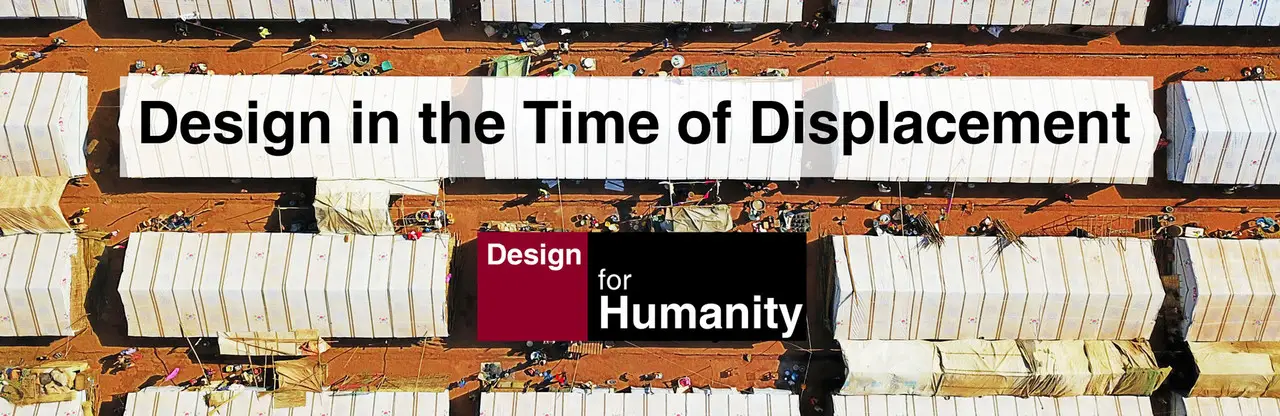
design, academic, public and private-sector communities. The 2019 Summit, Design in the Time of Displacement,
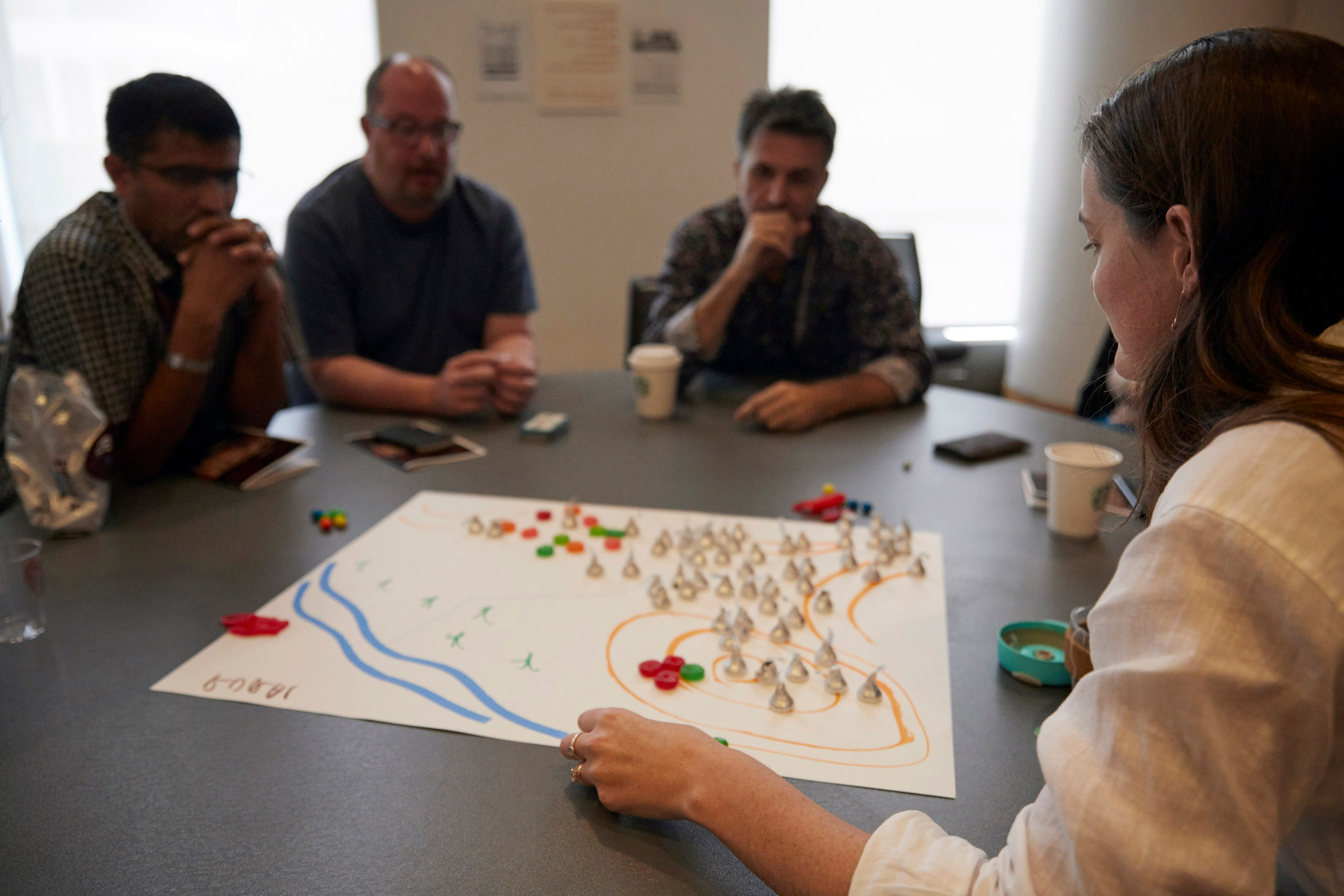
sharpened the agenda around two linked questions: how to move from camps to communities, and how to move from data to stories that protect rights, amplify voice and preserve memory. Dialogues, exhibitions and 12 workshops tested ideas with practitioners and designers, while the D4H Yearbooks documented the work and advanced four enduring pillars:
Casa Azul translated these principles into a design playbook. Developed by IIHA, IOM and TAMassociation, it proposed a flexible system of spaces for information, services, culture, rest, learning and integration along Venezuelan migration routes. The project was featured in Cooper Hewitt, Smithsonian Design Museum’s Designing Peace exhibition in 2022–2023. Its adaptable logic also informed a 2022 agreement to establish a Punto Azul information and support space for migrants in Montevideo.
The Design for Humanity Journal carries this work forward as a biannual, digital-first and open-access publication. It is neither a conventional academic journal nor a project magazine. It brings together scholarship, operational learning, design artefacts, visual evidence, community knowledge and critical debate, using the review route most appropriate to
each format.
The Journal treats design as more than the appearance of a product or space. It examines the systems, institutions,
infrastructures, interfaces, narratives and power relations through which humanitarian action is organised. Visual
material and design artefacts are treated as forms of evidence rather than illustration. Successful projects are welcome, but so are failure analyses, contested decisions, unintended consequences and methods that did not transfer as expected.
The Journal is global in scope and multilingual in orientation. It gives particular attention to knowledge produced by
crisis-affected communities, refugee- and migrant-led organisations, local practitioners and contributors from regions
that remain under-represented in English-language publishing, while remaining open to relevant work from every region and discipline.
Issue #1 asks what changes when displacement is understood as a designed system rather than a sequence of isolated emergency outputs. It focuses on the physical, service, informational and governance choices that shape protection, access, habitability, agency and long-term integration.
Authors remain responsible for permissions, consent, accuracy, conflicts of interest and the safe handling of sensitive information. Material that could expose people, routes, services or locations must be minimised, aggregated, redacted or withheld as appropriate. Submission is subject to the Journal’s full publication disclaimer, ethics, safeguarding, data- responsibility and rights policies. Responsible use of AI-assisted tools is permitted. Authors must disclose substantive use; verify all outputs, citations and translations; and retain full responsibility for the submitted work. Confidential, personal, protection-sensitive or otherwise restricted material must not be entered into public AI systems. AI systems cannot be credited as authors, and
synthetic media must not be presented as documentary evidence of real people, places or events.
The Journal welcomes proposals from humanitarian and development practitioners; academic and independent researchers; architects, urbanists, designers and technologists; local and national public authorities; refugee- and migrant-led organisations; civil-society and community groups; artists and visual storytellers; students and emerging professionals; and people with lived experience of displacement. Co-authored and cross-sector contributions are particularly encouraged.
Research & Innovation. Original research, evaluation, methods or conceptual advances; normally 3,000–6,000 words.
Case Study / Field Report. Implemented work with context, decisions, outcomes, trade-offs and operational learning;
normally 1,500–3,500 words.
Design Showcase / Visual Essay. Spatial, visual or material evidence with a concise analytical narrative, permissions and
full captions.
Dialogue / Interview. Structured cross-sector or community conversations with a clear editorial question and practice
takeaways.
Emerging Voices. Shorter work by students, early-career contributors and under-represented authors, with
developmental editing where feasible.
Reviews & Resources. Critical reviews of tools, repositories, books, exhibitions, datasets and platforms relevant to
humanitarian design.
Editorial approach
All submissions receive editorial review for relevance, clarity, evidence, ethics and contribution value. Selected field, case and visual pieces may receive moderated community-informed commentary. Research articles may undergo external double-blind review where methodological scrutiny or academic positioning warrants it. The review route will match the format rather than forcing every contribution into the same model.
The primary publication language at launch is English. Multilingual abstracts are encouraged, particularly in Spanish, French and Arabic where feasible. The Journal is open access and charges no submission or publication fee. Plain- language summaries, accurate captions, alt text and accessible visual presentation are treated as core editorial requirements.
Call for Contributions opens 10 September, 2026
Proposal / Abstract Deadline 31 October, 2026
Full Contribution Deadline 15 January, 2027
Issue 1 Publication 30 May, 2027
Learn more: iihaglobal.org/research/design4humanity/
Inquire: apreato@fordham.edu
Email subject: D4H Journal Issue #1
Submit: d4hjournal@fordham.edu
Through events, research, publications, and collaborative projects, the multi-year Design for Humanity Initiative aims to explore how designers and humanitarians can collaboratively drive humanitarian response in a more dignified, inclusive, and sustainable direction.
Key objectives of the Design for Humanity Initiative will include:
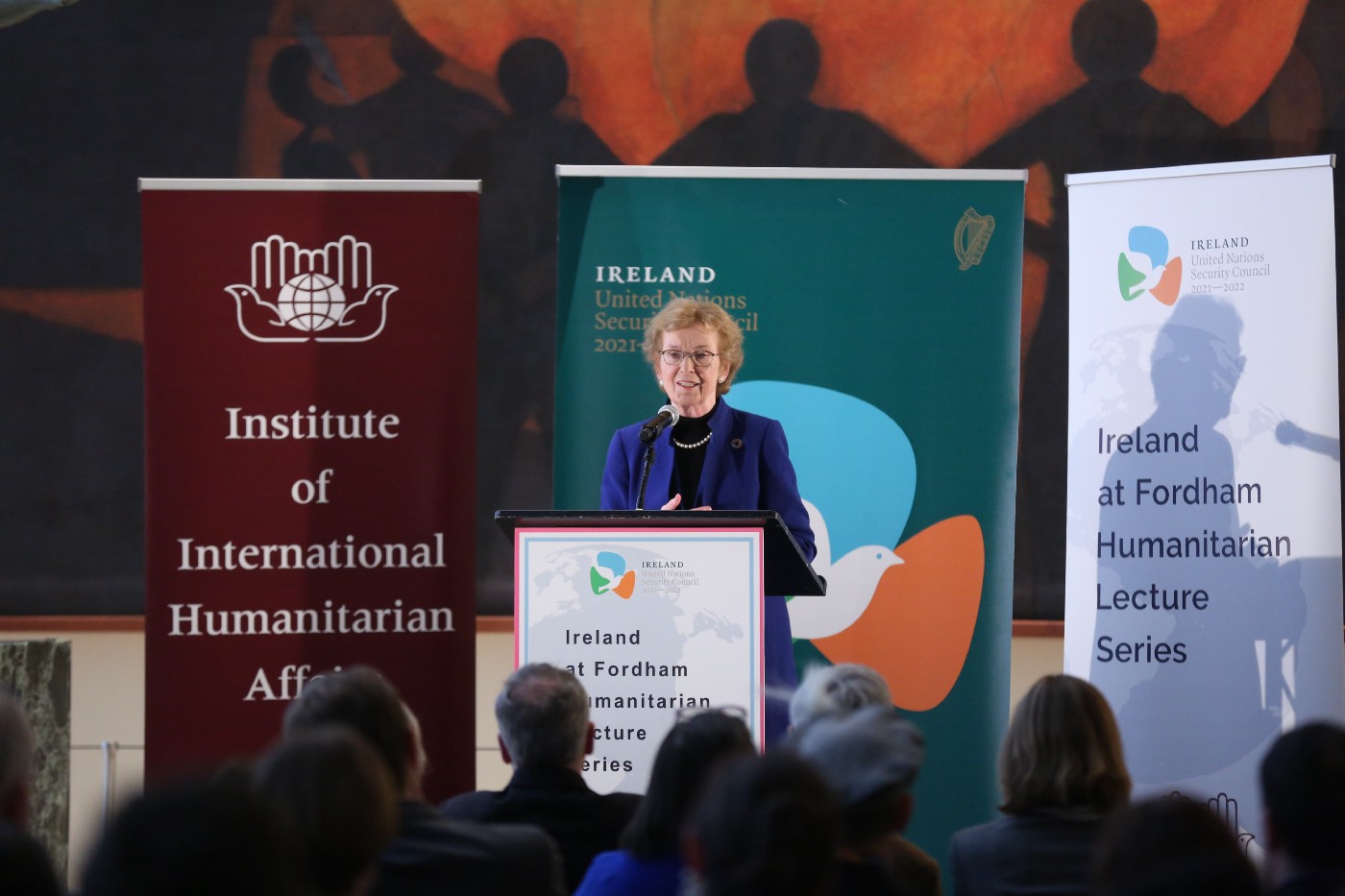
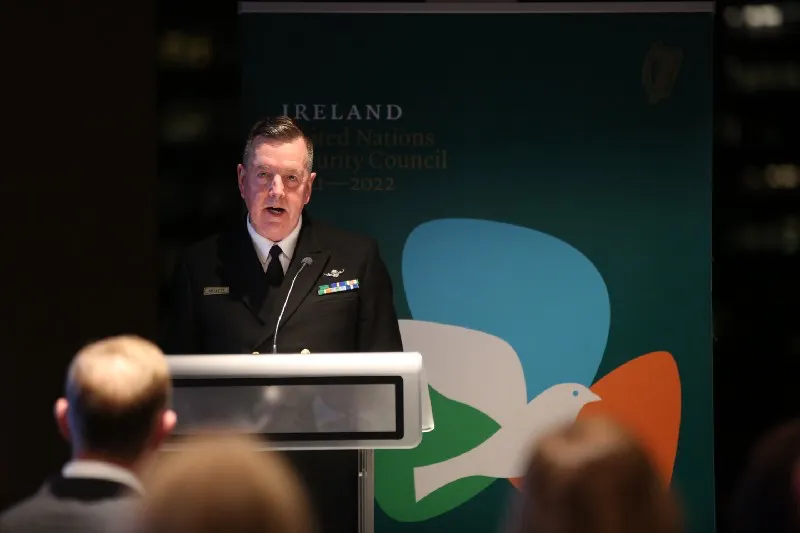
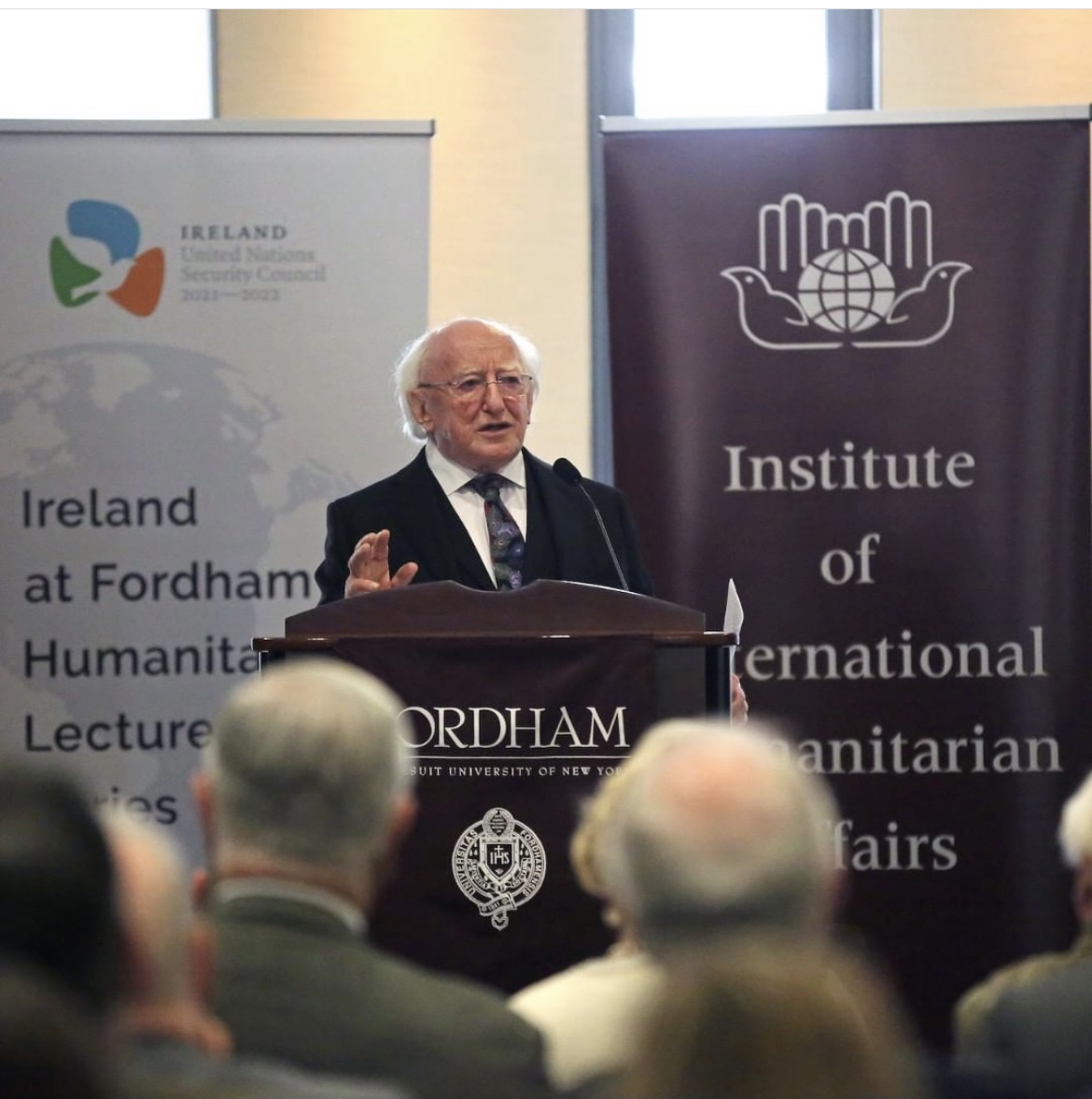
On June 22nd 2018 the Institute of International Humanitarian Affairs and the UN Migration Agency, hosted the first Design for Humanity Summit at Fordham University in New York City. Presenters from design, humanitarian and private sectors explored the intersection of design and humanitarian action for dignified crisis response.
The Design for Humanity Summit was made possible with the support of the Permanent Mission of Ireland to the United Nations, the Center for International Humanitarian Cooperation and Fordham University. Community partners included InterAction, ART WORKS Projects for Human Rights and the American Society of Interior Designers.
Established in 1951, IOM is the leading inter-governmental organization in the field of migration and works closely with governmental, intergovernmental and non-governmental partners. With 173 member states, a further 8 states holding observer status and offices in over 100 countries, IOM is dedicated to promoting humane and orderly migration for the benefit of all. It does so by providing services and advice to governments and migrants. IOM works to help ensure the orderly and humane management of migration, to promote international cooperation on migration issues, to assist in the search for practical solutions to migration problems and to provide humanitarian assistance to migrants in need, including refugees and internally displaced people
To learn more about each project please click web, yearbook, or press
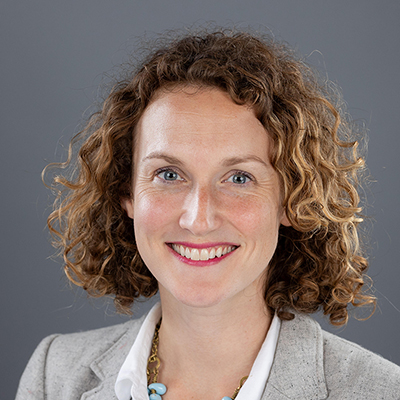
Assistant Provost for Corporate Relations at Fordham University
Holly Curtis is an accomplished education leader, currently serving as the Assistant Provost for Corporate Relations at Fordham University. In this role, she fosters partnerships between academia and industry, driving innovative collaborations and advancing strategic goals. Prior to this, Holly was the Chief of Staff at Ascend Public Charter Schools, where she oversaw strategic planning for one of New York’s largest charter networks, and she also led MBA Admissions at NYU Stern School of Business.
With a strong background in strategic leadership, education management, program development, and recruitment, Holly’s career began in international development with Pencils of Promise in Laos. Her work there shaped her expertise in strategic planning and talent development.
Holly holds an MBA from NYU Stern and a BA in International Political Economy from Fordham University. She is deeply committed to advancing diversity and inclusion, and is a certified administrator of the Intercultural Development Inventory (IDI). She is also an alumna of NYU’s Global Inclusive Leadership Management Institute.
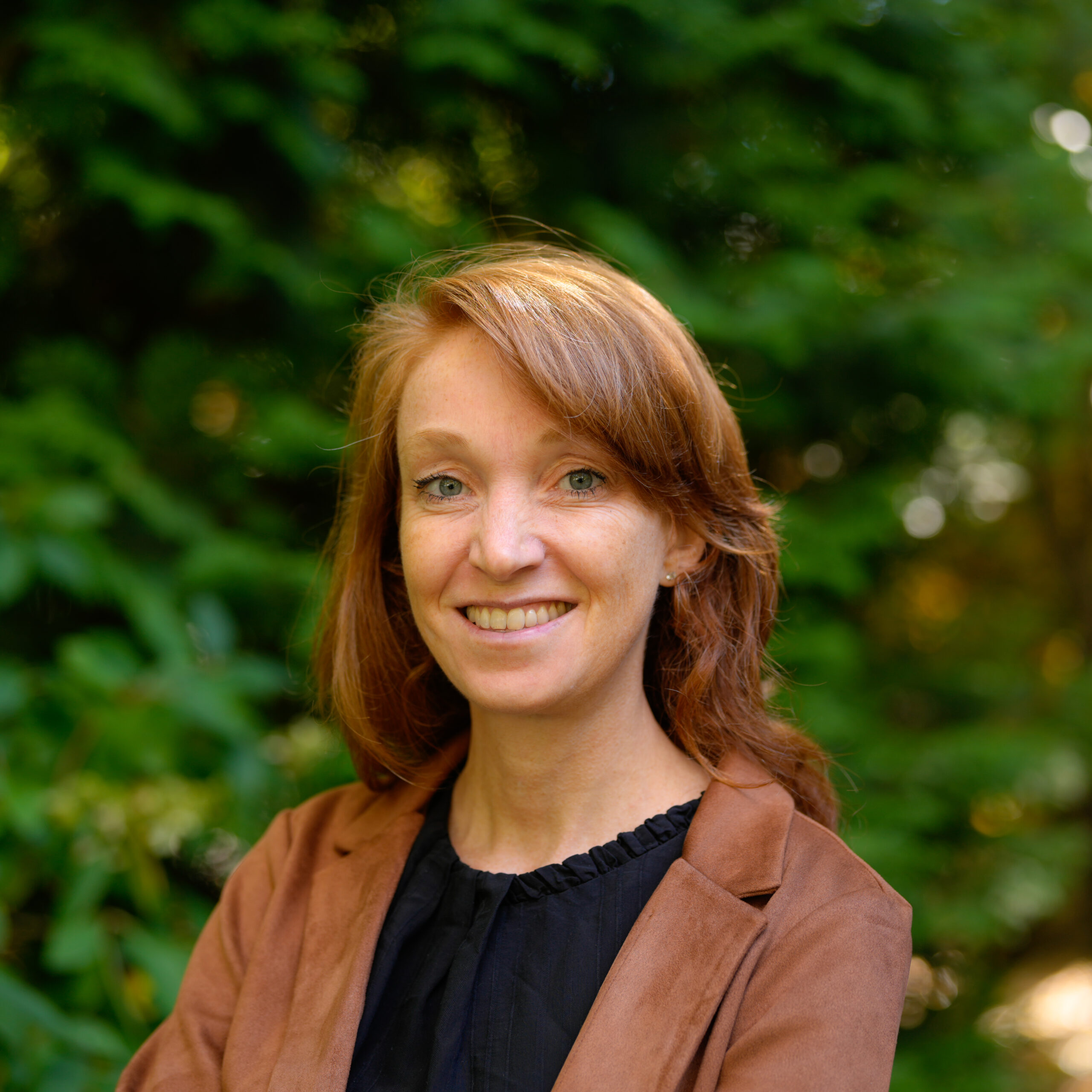
Helen Hamlyn Humanitarian Fellow and Global Program Director
Martine van der Does is a Dutch national and humanitarian expert with over 15 years of international experience. With a background in architecture she started her career working on humanitarian shelter at Delft University of Technology but soon moved to the field with Médécins sans Frontières (MSF) as a Construction Logistician. In 2010 Martine joined the Netherlands Foreign service where she worked in the Africa Department, Stabilisation and Humanitarian Aid Department and served as a Diplomat in Afghanistan and Jordan. In 2018 joined the International Committee of the Red Cross (ICRC) in Myanmar where she worked in remote areas on protection and water and habitat issues. Until recently Martine was the Regional Humanitarian Coordinator for the Netherlands Government in Amman, Jordan.
Martine is academically involved as a lecturer at Delft University in the Netherlands and Fordham University in New York. In the past years she also ran the prestigious International Diploma in Humanitarian Assistance (IDHA) as a Course Director in Geneva. Martine holds a Master of Science Degree in Architecture from Delft University of Technology and a Masters of Arts Degree in International Humanitarian Action from Fordham University. In her time off she is an active cyclist, runner, and enjoys ultraraces.
She accepted a position as Helen Hamlyn Humanitarian Fellow at the IIHA in 2024.
Seriously considering the IDHA and want to learn more? Book an appointment with Martine on the left.
Martine hosts Corporate Humanity, a podcast produced by Fordham University’s Institute of International Humanitarian Affairs.
Master of Science in Architecture (MSc) and Master of Arts in International Humanitarian Action (MIHA) and IDHA 24
With the IIHA since: 2008
Current courses: IDHA and non-academic courses
In my free time I enjoy: Traveling, mountains, playing guitar and endurance sports such as long (distance) running, cycling, skiing and swimming.
“In a world you can be anything, be kind to yourself and the people you work for and with. ”